Uganda coffee origin guide

Ugandan Coffee: Origin, Harvest and Processing

Uganda offers buyers two distinct coffee families: naturally strong Robusta from the country’s lower-altitude growing areas and expressive Arabica from its mountain regions. Differences in elevation, rainfall, soil and processing create a broad range of commercial and sensory profiles.

Shaori Coffee sources and exports selected Ugandan green coffee for roasters, manufacturers, importers and coffee traders. This guide provides a practical overview of the principal growing areas, indicative harvest periods and processing methods.

Coffee cherries growing in Uganda, origin of Shaori Robusta and Arabica green coffee
Image placeholder note: an original Shaori plantation or coffee-cherry photograph can replace this export image once available.

One country, distinct coffee profiles

Understanding Uganda as a Coffee Origin

Uganda’s coffee landscape extends from the central lowlands around Lake Victoria to the elevated slopes of Mount Elgon and the western mountain regions. Robusta is widely associated with the central, eastern and western lower-altitude areas, while Arabica is cultivated primarily in higher and cooler locations.

The profile of an individual lot is influenced by more than its region. Variety, elevation, rainfall, maturity at harvest, processing, drying, storage and preparation all affect the final cup. Regional descriptions should therefore be treated as useful orientation rather than a guaranteed specification.

  • Robusta and Arabica
  • Multiple growing regions
  • Main crop and fly crop
  • Natural and washed processing

From central Uganda to Mount Elgon

Key Coffee-Growing Areas

Uganda’s varied geography creates different production periods and cup characteristics. The following regional profiles describe common tendencies. Final quality and availability are always confirmed for the offered lot.

Central Uganda

Primarily Robusta

Selected districts
Mpigi, Luweero, Nakaseke, Lwengo, Sembabule, Rakai, Masaka, Mityana, Mubende and surrounding producing areas
Typical profile
Rounded body with roasted cocoa, gentle fruit, mild floral impressions and a softly sweet finish.
Commercial relevance
An important source of Ugandan commercial Robusta used by roasters, manufacturers and blend developers.
Eastern Uganda

Primarily Robusta

Selected districts
Iganga, Kamuli, Bugiri and surrounding producing areas
Typical profile
Chocolate, warm spice, roasted nuts and caramel, generally supported by a firm Robusta body.
Commercial relevance
Suitable for espresso blends, commercial roasting programmes and products requiring body and intensity.

Mount Elgon

Arabica

Selected districts
Manafwa, Namisindwa, Bududa, Sironko, Bulambuli and Kapchorwa
Typical profile
Floral and dried-fruit character with soft chocolate, clove-like spice, orange-toned acidity and a wine-like finish.
Commercial relevance
The Mount Elgon area is associated with recognised Ugandan Arabica grades, including Bugisu coffees.

Western Uganda

Arabica and Robusta, depending on location and elevation

Selected districts
Kasese, Kabarole/Fort Portal, Rubirizi, Bundibugyo, Bushenyi, Ibanda and Ntungamo
Typical profile
Profiles may range from mellow Robusta with citrus and dried tropical-fruit impressions to higher-altitude Arabica with brighter acidity and fruit character.
Commercial relevance
A diverse sourcing area offering different processing and profile possibilities.

Sensory orientation

Typical Regional Cup Characteristics

Cup profiles help buyers understand the likely sensory direction of a coffee. They do not replace lot-specific evaluation. Shaori can provide available specifications and pre-shipment samples for commercial assessment.

Central Uganda

Robusta

Roasted cocoa, stone fruit, mild floral character, rounded body and gentle sweetness.

Eastern Uganda

Robusta

Chocolate, caramel, roasted nuts, warm spice and a strong body.

Mount Elgon

Arabica

Floral notes, dried fruit, chocolate, clove-like spice, citrus acidity and a wine-like finish.

Western Uganda

Arabica and Robusta

Citrus, coffee blossom, dried tropical fruit and a mellow or brighter body depending on altitude and coffee type.

Actual cup characteristics vary by lot, crop, grade and processing method. Buyers should rely on the confirmed specification and approved sample for purchasing decisions.

Indicative seasonality

Uganda Coffee Harvest Calendar

Many Ugandan producing areas have a principal harvest and a smaller secondary harvest, commonly called the fly crop. Timing may shift because of rainfall, altitude and local growing conditions.

Main crop
The principal and usually larger harvesting period within a producing area.
Fly crop
A smaller secondary harvest occurring at another point in the agricultural cycle.

Central Uganda – Group 1

Selected districts
Mpigi, Luweero, Nakaseke and Lwengo
Coffee type and grades
Robusta, commonly including Screens 12, 15 and 18
Indicative main crop
September–December
Indicative fly crop
March–May

Central Uganda – Group 2

Selected districts
Sembabule, Rakai, Masaka, Mityana, Mubende and surrounding areas
Coffee type and grades
Robusta, commonly including Screens 12, 15 and 18
Indicative main crop
March–June
Indicative fly crop
September–December

Eastern Uganda

Selected districts
Iganga, Kamuli and Bugiri
Coffee type and grades
Robusta, commonly including Screens 12, 15 and 18
Indicative main crop
September–January
Indicative fly crop
April–June

Mount Elgon

Selected districts
Manafwa, Namisindwa, Bududa, Sironko, Bulambuli and Kapchorwa
Coffee type and grades
Arabica, including grades such as AA, A, AB, B and Peaberry depending on the lot
Indicative main crop
October–January
Indicative fly crop
May–July

Western Uganda – Arabica

Selected districts
Kasese, Kabarole/Fort Portal and Rubirizi
Coffee type and grades
Arabica, with screen grades depending on the lot
Indicative main crop
August–December
Indicative fly crop
March–May

Western Uganda – Robusta

Selected districts
Bundibugyo, Bushenyi, Ibanda and Ntungamo
Coffee type and grades
Robusta, commonly including Screens 12, 15 and 18
Indicative main crop
August–November
Indicative fly crop
March–May

Harvest periods are indicative and may vary between districts, farms and crop years. Current availability must be confirmed when requesting an offer.

From cherry to green coffee

Principal Coffee Processing Methods

Processing has a direct influence on physical quality, consistency and cup character. Natural and washed processing are the two principal methods relevant to Shaori’s current green coffee range.

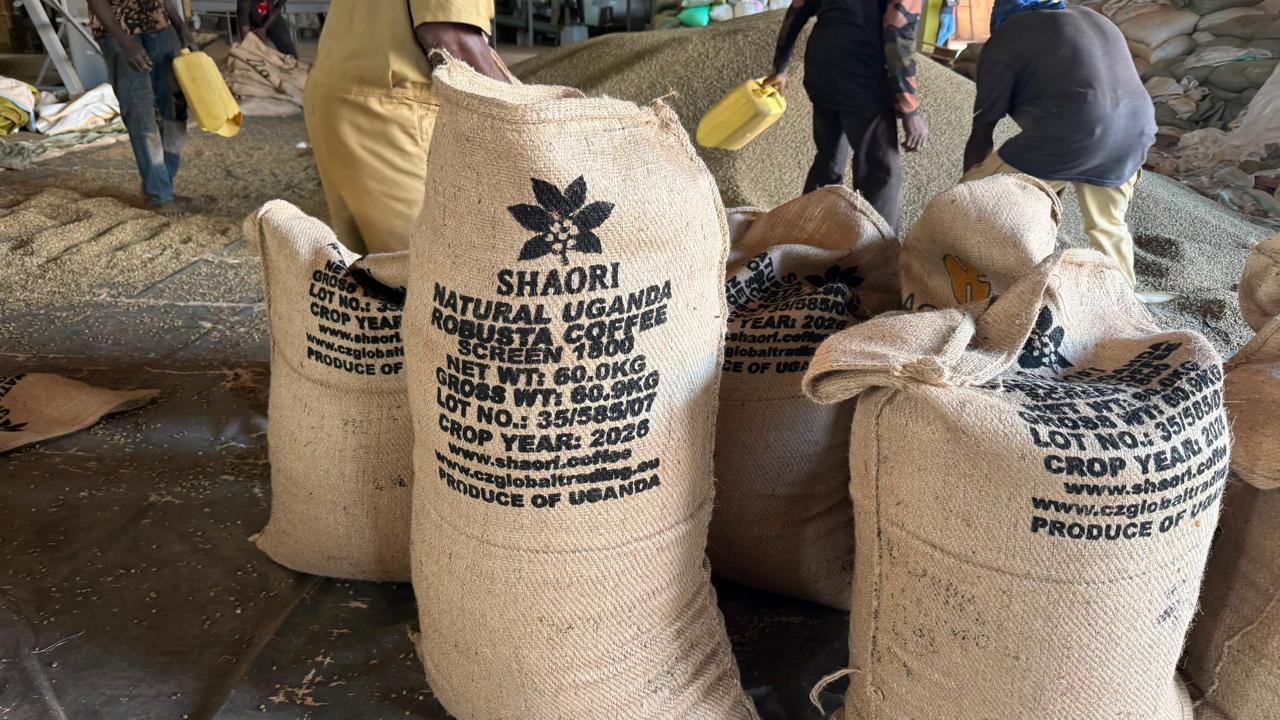
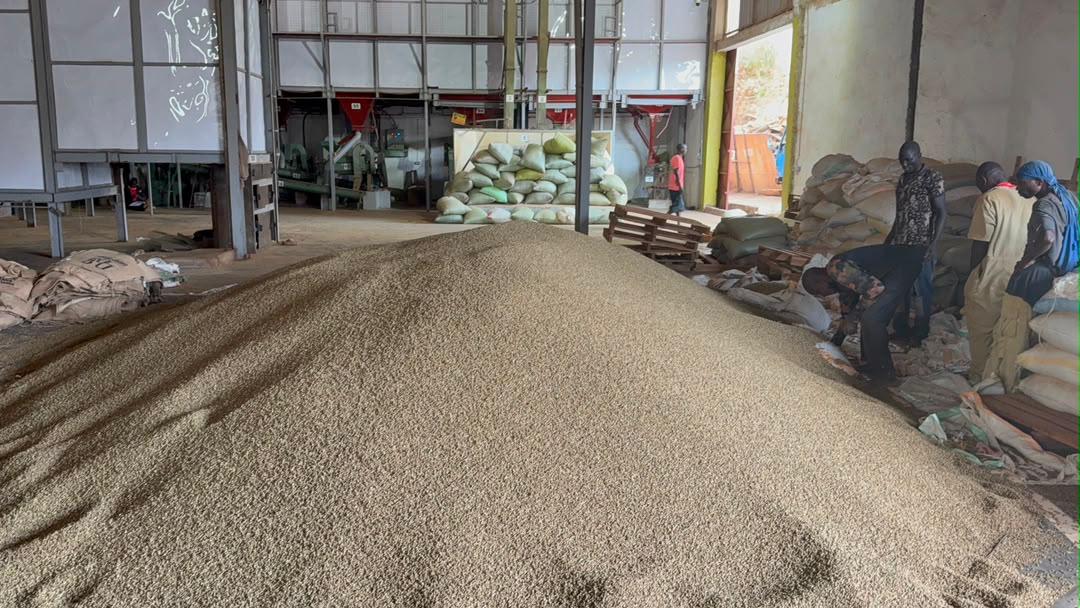
Natural processing of Ugandan coffee cherries before hulling and grading

Natural / Dry Processing

Ripe coffee cherries are dried with the fruit surrounding the seed. Drying takes place on suitable drying surfaces or structures with regular movement to encourage uniformity. Once the required moisture level is reached, the dried cherry is hulled. The coffee can then be cleaned, destoned, graded and colour sorted according to the required specification.

Typical cup influence: Natural processing can contribute greater body, fruit character, sweetness and intensity, although the result depends on the coffee, drying control and final preparation.

Relevant Shaori coffees

Washed / Wet Processing

Fresh cherries are depulped to remove the outer fruit. The remaining mucilage is reduced through controlled fermentation and washing. The parchment coffee is then carefully dried before hulling, grading and final preparation for export.

Typical cup influence: Washed processing is generally associated with a cleaner cup, clearer acidity and more defined flavour separation.

Relevant Shaori coffees

Image placeholder: original Shaori photograph of coffee washing, parchment drying or washed Arabica preparation (to be uploaded).

Moisture, screen distribution, defect tolerance and other physical parameters are confirmed in the specification for each offered lot.

Available through Shaori Coffee

Ugandan Green Coffee for Commercial Buyers

Shaori supplies selected commercial Robusta grades and Ugandan Arabica coffees. Availability, crop details, quality parameters and prices are confirmed individually for each offer.

Standard packaging
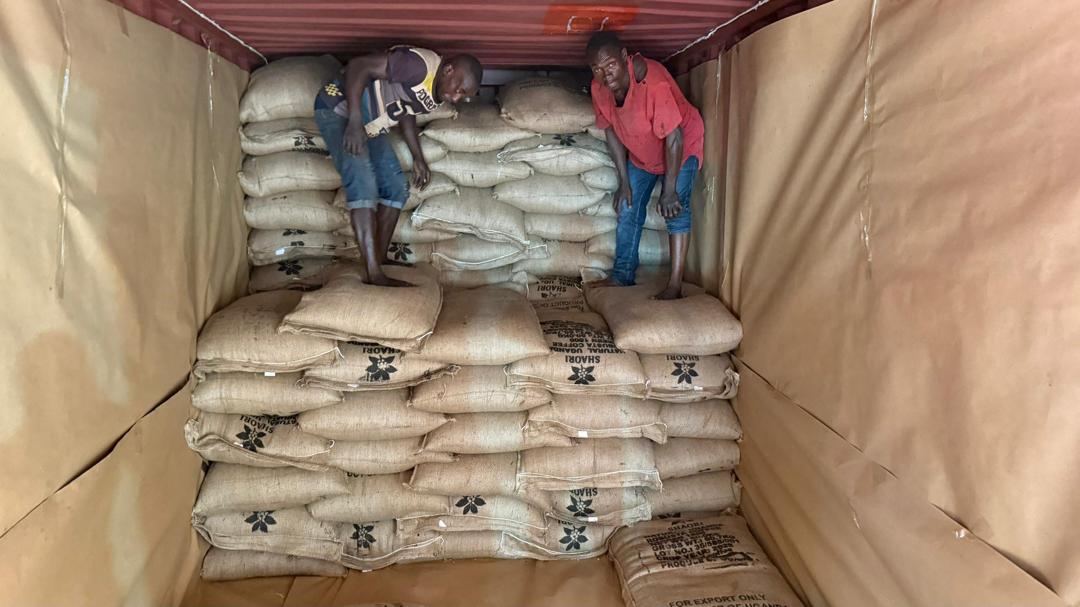
60 kg jute bags. Inner liners may be available on request.
Typical container quantity
Approximately 19.8 MT or 330 bags of 60 kg, subject to the final loading and shipping plan.
Commercial terms
FCA Kampala and FOB Mombasa offers are available. CFR or CIF quotations may be prepared for the buyer’s destination.
Quality confirmation
Specifications and pre-shipment samples are available subject to the offered lot.
Shaori jute bags of Ugandan green coffee loaded inside an export container

Buyer information

Frequently Asked Questions

Which types of green coffee does Uganda produce?

Uganda produces both Robusta and Arabica. Robusta is widely grown in lower-altitude areas, while Arabica is associated primarily with higher locations such as Mount Elgon and parts of western Uganda.

When is Ugandan coffee harvested?

Harvest timing differs by region. Many areas have a main crop and a smaller fly crop. Because rainfall and local conditions can shift the calendar, buyers should confirm current availability for the required grade and crop.

What is the difference between natural and washed coffee?

Natural coffee is dried with the fruit around the seed before hulling. Washed coffee is depulped and washed before the parchment is dried. Natural processing often supports body and fruit intensity, while washed processing is commonly associated with a cleaner and more defined cup.

Which Ugandan coffees does Shaori currently offer?

Shaori’s range includes Robusta Natural Screens 12, 15 and 18, Arabica Drugar, Arabica Wugar and Arabica Bugisu AA. Availability and specifications are confirmed for each lot.

Can buyers request samples and specifications?

Yes. Commercial buyers can contact Shaori to request current availability, specifications and pre-shipment samples. Any purchasing decision should be based on the confirmed specification and approved sample.

How is Shaori coffee packed for export?

Standard export packing is in 60 kg jute bags. Additional inner liners may be available on request. Final packing and loading details are confirmed in the commercial offer.

Source Ugandan green coffee

Request Current Availability from Shaori Coffee

Tell us which coffee, volume and destination you require. We will confirm available lots, specifications, commercial terms and sample options.